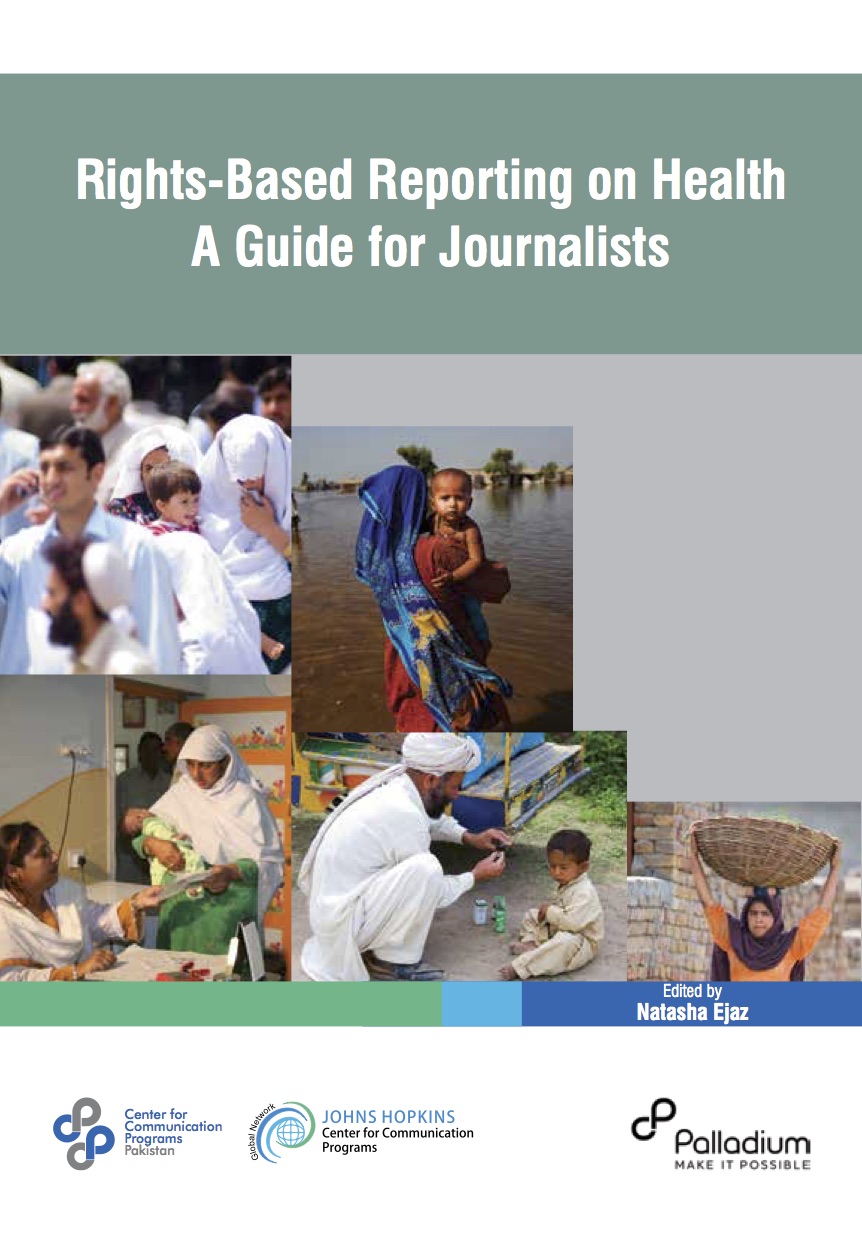
Center led the national level advocacy and social and behaviour change through use of various media and engagement of community-based networks. Center implemented six core activity-sets within the project. Through a series of district-based consultation sessions with key stakeholders, Center developed a reforms agenda called "One Voice for Health," which later culminated into a "Charter of Demand" for better health and nutrition services for citizens of Pakistan. One Voice for Health agenda was then linked to national-level campaigns as well as to a series of district-based initiatives, i.e. television talk shows, to highlight gaps in service delivery at the grassroots level and to hold service providers and district manager accountable and answerable to public. Center also engaged its countrywide network of religious leaders and religious organisation to build demand for health services and improve health seeking behaviour, especially by improving male participation towards women's health needs. Center partnered with various media groups to execute national-level campaigns for bringing out issues and gaps in service delivery, which are left uncovered by mainstream media. Center also worked with selected scriptwriters and screenwriters, through their production houses and channels, and developed two drama serials, broadcasted on Hum Television and Urdu1, and a telefilm on the issues surrounding reproductive, maternal, newborn and child health. Center, together with Johns Hopkins University, developed a handbook and manual on Rights-Based Health Reporting and a graduate-level course on Human Rights Media. Center further cultivated its existing network of journalists by providing them training on the rights-based approach to health reporting and constituting a peer-to-peer structure for implementing a nationwide training programme for district-based journalists for brining improvement in health reporting and coverage. Center also developed a first-ever university course on the art and strategy of entertainment-education and partnering with several universities across Pakistan for its induction.
The 21-episode highly popular television drama serial, Sammi, produced by Center and originally broadcasted on Hum Television, was later rebroadcasted in Sindhi and Saraiki languages on regional channels. Similarly, the drama serial Mujhay Jeenay Do was re-televised by Urdu1 channel on weekend during primetime to ensure even wider audience. The 2018 National Ulama Convention deliberated on a cultural practice whereby first bath is given to newborns soon after birth for the recitation of call for prayer that carries the risk of hypothermia. The participants of the convention issued a joint religious decree declaring the practice not only harmful for children but having no obligation under Islam. Each round of Friday sermons reached to an estimated 160,000 congregants in the focus districts of Punjab and KP. A significant milestone was achieved with the launch of Pakistan’s first ever health bulletins on two mainstream television news channels, namely Dunya News and News One. This was the first time that a dedicated space was allocated to health content on mainstream news media in Pakistan, which otherwise remains overshadowed with coverage of political issues. The rights-based journalists network cultivated under the project continued to be provided with technical backstopping. As a result, health coverage recorded further increase of 98% in 2018 as compared to the previous year and overall 266% in last four years since Center started its active engagement with journalists to increase the coverage of health issues. The Excellence in Journalism Award, Lab Azad, for year 2018 is being conferred to print and broadcast journalists in early 2019 under three themes with four categories each. The award is now recognized as the most independent, impartial, prestigious, and the only one promoting specialized reporting.